Families are down to last pennies with no relief in sight

Food pantry for families

In communities like Chelsea, even in the best of times, families scrape by financially. They work long hours in low-wage jobs, overcrowd apartments to afford rent, and cook creatively to keep everyone fed. These families work so hard to build a better life for themselves and their children – painstakingly inching towards financial independence and an “American dream.”

In a matter of days, the COVID-19 crisis erased decades of progress for our families. The latest U.S. jobs report shows that Latinos are the worst hit ethnic group in the country, with a record national jobless rate of 18.9%.

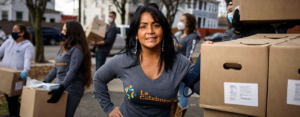
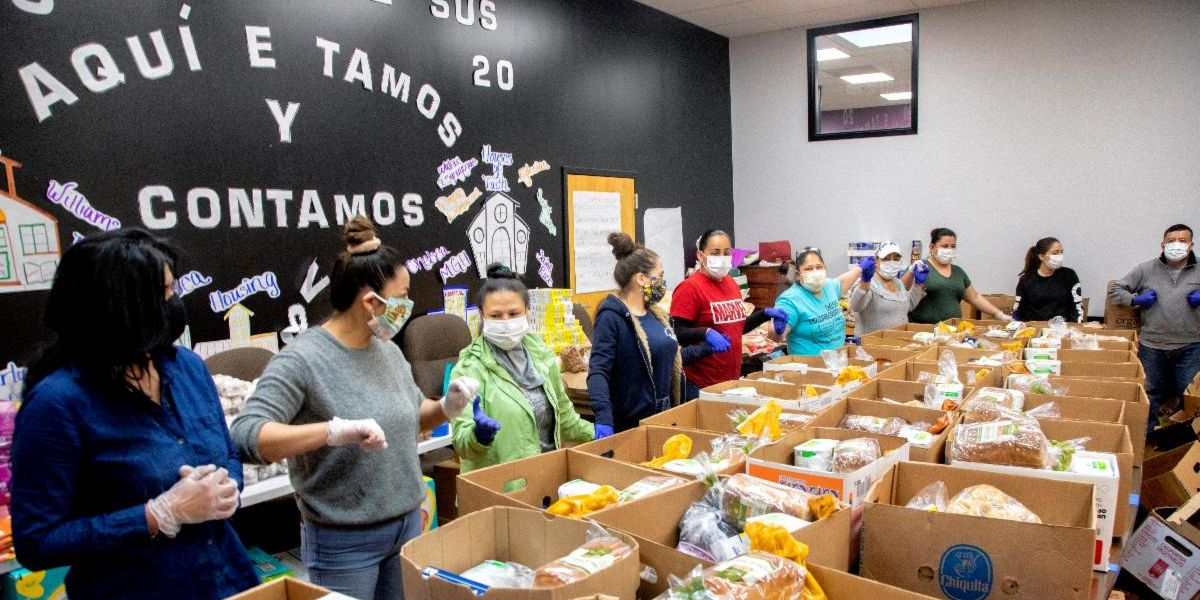
The Grariejo family is one of many feeling the financial pain, with no end in sight. Macedonia, mom of three, worked 40 hours/week for minimum wage. It was a daily struggle, but she was able to scratch together enough for rent and food each month to support her kids and her elderly mother. With the COVID-19 shutdown, her hours were cut to five/week and the family fell into financial crisis overnight. To survive, Macedonia relies of food pantries and loves the Latino foods that the Collaborative distributes.

Before COVID, Macedonia barely got by and saving for emergencies was out of the question. Still, she considered her family fortunate – Macedonia was employed and her family had a roof over their heads. For a time, they had a small sense of security. Post-COVID, Macedonia hasn’t paid rent for two months, and even with the eviction moratorium in place for now, she knows she’ll never be able to catch up on those back rent payments. She’s afraid her family will be on the streets as soon as the moratorium ends.

Attorney General Maura Healey joined us on the front lines recently to talk with community members about their legal rights. From the Boston Globe:

“It’s really poignant and heartbreaking to see someone just come from the front lines working, to stand in line at a food pantry to get baby formula and diapers and food for their household,” the attorney general said in a phone interview. “I think people are really desperate…You see that people are stoic and resilient but desperate. They’re hurting.”

Land Acknowledgment

At La Colaborativa, we believe that building a more just, equitable, and healthy future begins with recognizing the histories of the land and the communities that came before us, while confronting the systemic inequities that continue to shape our society today.

We acknowledge that La Colaborativa is located in Winnisimmet, now known as Chelsea, Massachusetts, on the ancestral and unceded homeland of the Massachusett People, whose deep connections to this land, culture, and community endure today.

We honor the Indigenous peoples who have stewarded this land for generations and recognize the lasting consequences of colonization, forced displacement, dispossession, and systemic injustice. These histories are not simply part of the past. Their legacies continue to influence access to land, housing, healthcare, education, economic opportunity, and the resources that allow individuals, families, and communities to thrive.

At La Colaborativa, we understand that health equity cannot be achieved without addressing the social determinants of health, the conditions in which people are born, grow, live, work, and age.

Structural racism, poverty, housing instability, food insecurity, and barriers to education, employment, and healthcare disproportionately affect immigrant, Indigenous, and historically marginalized communities, perpetuating cycles of inequality across generations.

This understanding is at the heart of La Colaborativa's holistic, community-driven model. Our work recognizes that the challenges facing our communities are deeply interconnected and cannot be addressed in isolation. By integrating housing stability, food access, healthcare, workforce development, education, economic mobility, and community advocacy, we work to address the root causes of inequity, strengthen community resilience, and create pathways toward lasting social and economic opportunity.

Rooted in our mission of Levantando al Pueblo, we believe that meaningful change begins by centering the voices, experiences, cultural identities, and leadership of the communities most affected by systemic injustice. Just as we honor the resilience and enduring presence of Indigenous peoples, we recognize the strength of immigrant families and historically marginalized communities who continue to shape our collective future.

For us, a land acknowledgment is more than a statement of respect. It is a reminder of our responsibility to turn recognition into meaningful action, challenge the systems that perpetuate inequality, and advance a model of community well-being grounded in dignity, belonging, self-determination, and justice.

We offer this acknowledgment with respect and gratitude to the Massachusett People, their ancestors, elders, and present-day communities, and with a continued commitment to learning, solidarity, and building a future where every community has the resources, opportunities, and power to thrive.